
Martyred President Ziaur Rahman and Bangladesh’s Unfinished Dream
On the Occasion of His 45th Martyrdom Anniversary — 30 May 2026
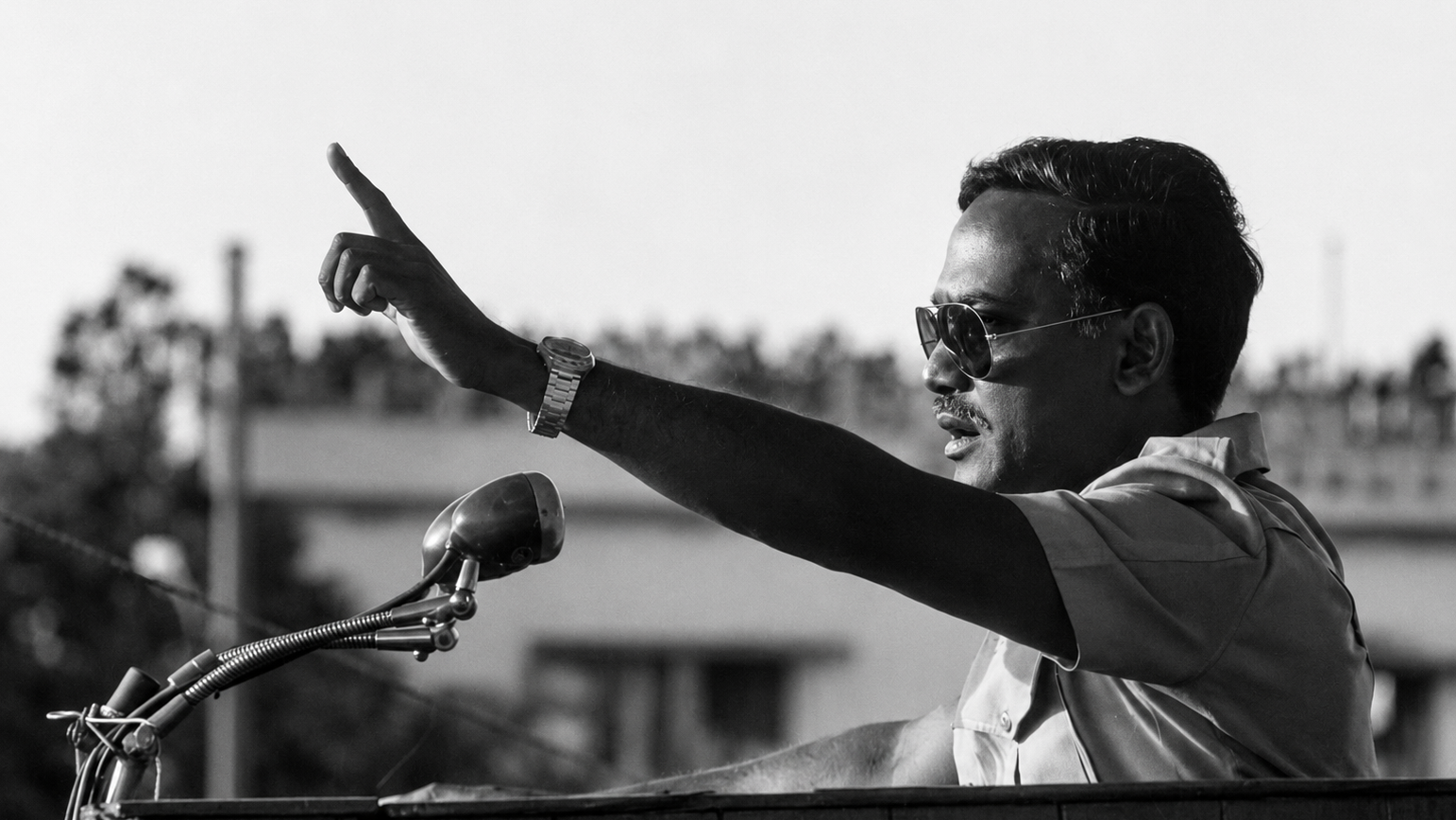
The thirtieth of May is not merely a date on the calendar of Bangladesh — it is a silence, a pause in the nation’s breathing, a wound that time has scabbed over but never fully healed. On this day in 1981, at the Circuit House in Chittagong, President Ziaur Rahman — one of the finest sons this land has ever produced — fell to an assassin’s bullet. He was forty-five years old. His dream for Bangladesh was running at full speed. And it was stopped, deliberately, violently, by those who feared what a man of that vision could accomplish if given more time. Today, on the 45th anniversary of his martyrdom, we do not merely mourn. We ask questions. We ask: when a man dies, does his work die with him? We ask: the seeds he planted in blood-soaked earth — where is that harvest today? And most urgently, we ask: does the generation of young Bangladeshis who never saw him, never heard his voice, never witnessed his leadership — do they know that the Bangladesh they inhabit today was built, in significant measure, by one man’s relentless labor, extraordinary courage, and far-sighted statecraft?
The proper measure of a statesman is not his eloquence, his charisma, or even his popularity in the moment — it is the distance between the condition of the country he received and the condition he left it in, and whether the direction he set continued to bear fruit long after he was gone. By that measure, Ziaur Rahman stands at a remarkable height. On the 26th of March, 1971, when Pakistani military forces were unleashing calculated terror upon sleeping Bengali households — burning homes, tearing children from their mothers’ arms, reducing a civilization to rubble — a voice broke through on the Kalurghat Radio Station in Chittagong: “I, Major Zia, hereby declare.” Four words, and the history of Bangladesh turned onto a new road. Here was a military officer who had built his career within the Pakistani army, who had every reason to stay cautious, to wait and see. Instead, he made a decision that would alter the destiny of an entire people. In proclaiming independence, he did not merely deliver a speech — he gave a nation its legitimacy. To a population that was confused, terrified, and leaderless, he said in effect: you have a cause worth fighting for, you have a land worth dying for, you have a name worth carrying. The surge of resistance that followed that broadcast cannot be adequately captured by any historian’s pen — it can only be felt.
As a frontline commander, Ziaur Rahman did not stop at the declaration. He fought. As the commanding officer of Z Force, he led engagements across the battlegrounds of Sylhet, Mymensingh, and Comilla, demonstrating military acumen and personal courage that earned him a permanent place in the annals of the Liberation War. But the true measure of his greatness lies not only in his battlefield heroism — it lies in the fact that after the war ended, he remained a fighter. Not against an external enemy, but against poverty, against mismanagement, against the creeping despair that threatened to consume a newly independent and deeply traumatized nation.
When Ziaur Rahman assumed state power in 1975, the Bangladesh he inherited was, by any objective assessment, a broken country. Between 1972 and 1974, a catastrophic famine, acute political instability, and economic disorder had earned Bangladesh the infamous label of a “bottomless basket.” In international discourse, the country’s name had become almost synonymous with destitution, flood, and famine. Per capita income stood at a mere 173 US dollars. Foreign exchange reserves were nearly depleted. Export earnings were negligible. In this moment, Ziaur Rahman was not simply an administrator — he was a philosopher of governance who understood, with unusual clarity, that to save a country you must first save its people; to save its people you must give them food, give them purpose, and give them the dignity of work.
The canal-digging program he launched — what Bangladeshis remember as the khal khanan — is easy to dismiss in retrospect as a simple infrastructure project. It was far more than that. Ziaur Rahman grasped that Bangladesh’s fundamental strength lay in its agrarian, village-based economy, and that water — the management of water — was the key to unlocking that strength. He did not merely order the digging of canals from behind a presidential desk. He went to the villages himself. He stood in the mud. He worked alongside laborers with his own hands. The head of state, in his own soil. This was not theater — it was philosophy made physical. The message it sent was unmistakable: leadership means being at the front, not the top. That program directly employed nearly two million people and dramatically increased the country’s irrigation capacity. The area of irrigated agricultural land rose from 3 million acres to 5.6 million acres during his tenure. Rice production climbed from 11.2 million metric tons in 1975 to 15.4 million metric tons by 1981. GDP growth averaged 5 to 6 percent annually between 1976 and 1981 — a remarkable figure by South Asian standards of the era. These are not abstract statistics. They are the stories of families that had a meal, of children who did not go hungry, of farmers who had water in their fields.
But Ziaur Rahman’s economic thinking was never confined to agriculture alone. When we look at Bangladesh today — the world’s second-largest garment exporter, with annual exports exceeding 55 billion US dollars — we must look back at where that story began. In 1976, his government introduced targeted incentives for export-oriented industries and initiated the policy reforms that would attract foreign investment. Total exports at the time stood at a mere 360 million dollars. The first export-oriented garment factory in Bangladesh was established in 1978, during his tenure. The industrial architecture that Ziaur Rahman put in place — encouraging private enterprise, opening space for market-driven growth, linking Bangladesh’s economy to global trade — became the foundation upon which the country’s economic transformation was built over the following decades. When international economists today describe Bangladesh as a rising economy, the origin point of that rise traces back to the policy choices of Ziaur Rahman.
Alongside the promotion of export industries, one of his most consequential — and most underappreciated — decisions was the systematic development of labor export. In 1976, only about six thousand Bangladeshi workers were employed abroad. Through deliberate diplomatic engagement with oil-rich Middle Eastern nations, Ziaur Rahman opened formal bilateral agreements for labor migration. He understood that Bangladesh’s most abundant resource was not land or capital, but people — and that the skills and labor of its citizens, deployed intelligently in global markets, could generate the capital the country so desperately needed. Today, over ten million Bangladeshis work abroad and remit approximately 21 to 22 billion dollars annually — a financial lifeline that sustains millions of families and constitutes one of the central pillars of the national economy. The architecture of that system was built by Ziaur Rahman.
In education, his contribution is equally significant, though it has received less attention than his economic legacy. He understood that a nation’s true liberation comes through the education of its people — that political freedom without intellectual freedom is incomplete. During his tenure, primary education received particular emphasis. Programs were launched to extend educational access to rural populations who had previously been excluded from the system. He identified literacy as a national priority at a time when Bangladesh’s literacy rate hovered at a mere 25 to 30 percent. The number of educational institutions expanded significantly. The literacy journey that eventually carried Bangladesh to over 75 percent today — that journey’s path was cleared by Ziaur Rahman.
To understand his most profound political contribution, we must first understand the ideological desolation that gripped Bangladesh after 1975. The Fourth Amendment to the Constitution had established a one-party BAKSAL system that did not merely suppress political pluralism — it legally extinguished the freedom of thought. Newspapers were shut down, opposition parties were abolished, and the state was reduced to a single ventriloquist’s voice. When the political structure collapsed on the 15th of August, the physical apparatus was gone, but the ideological vacuum remained — because you can govern a country by force, but you can only build it through ideas. It was this crisis of ideas that Ziaur Rahman identified most clearly and addressed most boldly.
He recognized that Bangladesh’s question of political identity had been left dangerously unresolved. A newly independent state whose citizens cannot articulate a coherent, shared sense of national selfhood is a state perpetually vulnerable to fracture. Ziaur Rahman introduced the concept of “Bangladeshi nationalism” — and this was a consciously distinct formulation from “Bengali nationalism,” not merely in terminology but in philosophical substance. Bengali nationalism is essentially a linguistic and cultural identity, one that extends beyond geographic and religious borders to encompass a shared cultural heritage stretching from West Bengal to Dhaka. But Ziaur Rahman’s argument was precise: the nationalism of a sovereign state cannot rest on language alone. It must integrate territory, history, religious values, and a distinct state-consciousness into a self-contained identity. Bangladeshi nationalism was therefore not a political slogan — it was a philosophical project of national self-definition. In this identity, religion is not antagonistic but coexistent; language is not the sole criterion but one among equals, alongside land and history. This was an idea with roots, and it resonated because it reflected the actual lived experience of the majority of Bangladeshis.
Upon this ideological foundation, the Bangladesh Nationalist Party — BNP — was established on the 1st of September, 1978. The party rested on four pillars: Bangladeshi nationalism, democracy, social and economic justice, and a productive, market-oriented economy. Together, these four pillars produced a political philosophy that was coherent, grounded in the realities of the country, and resonant with the values of its people. Against the tendency to sever religion from public life in the name of secularism, BNP declared that religion is an inseparable dimension of this nation’s culture, and that no durable national identity can be built by denying it. Equally, multi-party democracy was framed not merely as an electoral procedure but as a fundamental principle of the state — because Ziaur Rahman understood, with unusual analytical clarity, that the unchallenged dominance of any single party or ideology produces, over time, corruption, stagnation, and autocracy. Competitive politics generates accountability; accountability constrains abuse; the absence of competition makes abuse structurally inevitable. BNP was therefore not simply the emergence of a new political party — it was the assertion of an alternative vision for Bangladesh’s political culture, one that nearly five decades later continues to animate the political beliefs of millions.
In international diplomacy, Ziaur Rahman displayed a sophistication that Bangladesh has rarely matched since. He worked tirelessly to reframe the country’s international image — from the “bottomless basket” of 1971 to a nation with developmental ambitions and strategic significance. He took the initiative, in 1980, to begin the consultations that would eventually lead to the formation of SAARC — the South Asian Association for Regional Cooperation, formally established in 1985. The idea of regional cooperation among South Asian nations, which he championed at a time of deep mutual suspicion, is today more relevant than ever in an era of shifting global power arrangements. He actively deepened Bangladesh’s ties with the Muslim world and sought an active role in the Organization of Islamic Cooperation. Simultaneously, he cultivated diplomatic relationships with China, Japan, and the United States, pursuing a balanced foreign policy that positioned Bangladesh as a genuinely non-aligned, independent actor on the world stage — a posture of dignity that small nations often struggle to maintain.
There is a question that must be asked honestly in any serious assessment: was Ziaur Rahman’s rule without flaw? The answer, equally honest, is no. No human governance is without error, no statesman’s decisions are all correct. But the measure of a leader is not the absence of mistakes — it is the overall trajectory, the direction of travel, the distance between where he started and where he left things. By that measure, Ziaur Rahman is unquestionably among the most consequential and successful leaders in Bangladesh’s history. He took a shattered, directionless country and made it believe in itself. He told a nation: you are capable of this. And then he worked to prove it. The evidence is in the numbers, in the institutions, in the economic structures that outlasted him by decades.
Standing in Bangladesh in 2026 and looking back, one is struck by a single fact: every major structural bet Ziaur Rahman placed has been vindicated by history. He encouraged the private sector — today the private sector is the spine of Bangladesh’s economy. He opened the path for export-oriented industry — Bangladesh now stands among the world’s leading exporters along that same path. He established multi-party democracy — the struggle to defend that democracy continues to define the country’s politics. He dreamed of regional cooperation — that dream has grown only more urgent with time. The true mark of a statesman’s greatness is revealed not in the immediate applause he receives, but in the degree to which his thinking continues to illuminate the road for his country long after he is gone. By that measure, Ziaur Rahman is not a figure of the past — he is a permanent presence in Bangladesh’s future.
A nation’s political inheritance is meaningful only when it transcends family lineage and manifests as ideological continuity. The political inheritance of Ziaur Rahman is carried today by his son, the Honorable Prime Minister Tarique Rahman — and this continuity is not merely symbolic. It is substantive. Prime Minister Tarique Rahman shares his father’s conviction that the fundamental rights of Bangladesh’s people, their democratic participation, and their economic emancipation must be pursued together, not traded against one another. His articulation of a welfare state vision, his stated commitment to combating corruption, his focus on employment for the young — and most powerfully, his historic return to Bangladeshi soil after seventeen years and his declaration “I have a plan” — carry within them the unmistakable echo of a father’s unfinished dream. This is what genuine political succession looks like: not imitation, but inspiration translated into new creation.
The Bangladesh Nationalist Party’s return to strength after more than a decade and a half of sustained political persecution — the lawsuits, the attacks, the exile, the systematic suppression — is itself a testament to the enduring power of the ideology that Ziaur Rahman planted. People gather under BNP’s banner not out of habit or sentiment alone, but because that banner represents a promise: the promise of democracy, of development, of a state that respects the voice of its citizens. Prime Minister Tarique Rahman is the bearer of that promise today, and the weight of that responsibility is commensurate with the magnitude of the people’s hope.
To the young reader of this essay — to the member of Generation Z who perhaps took to the streets in 2024, who perhaps bled for democracy, who perhaps is only now beginning to ask who Ziaur Rahman really was — consider this: in 1971, Ziaur Rahman was thirty-five years old. Many of your parents are around that age now. At thirty-five, he declared the independence of a nation. At thirty-five, he fought on the front lines with his life at stake. And for every year that followed, he poured that life into building the country whose name you carry as your identity. The Bangladesh you live in, the flag you wave, the national identity you hold — much of it was shaped by his hands. Recognizing this is not a matter of political loyalty. It is a matter of historical truth.
History’s great men die, but their work does not. Lincoln is gone, but the union of America endures. Lee Kuan Yew is gone, but Singapore’s prosperity endures. Atatürk is gone, but the foundations of modern Turkey endure. Ziaur Rahman is gone — but his Bangladesh endures. The Bangladesh where people can vote, where people can speak, where people can dream. The Bangladesh where a farmer harvests his field, a worker earns his wage, a student studies for a future worth imagining — in all of this, Ziaur Rahman is present. A martyr’s presence does not fade. It transforms — into institutions, into ideals, into the quiet convictions of the people who carry his legacy forward without always knowing it.
On this thirtieth of May, as we remember the Martyred President, one thought rises above all others: he left, but his journey did not end. The torch he lit continues to burn. In the leadership of Prime Minister Tarique Rahman, in the aspirations of a new generation of Bangladeshis, in the still-unfinished work of building a just, democratic, and prosperous nation — Ziaur Rahman is alive. As Rabindranath Tagore wrote: “I do not want to die in these beautiful world / Among human beings I wish to live.” Ziaur Rahman lives precisely this way — in the soil of Bangladesh, in its people, in every democratic voice that refuses to be silenced, in every dream of a better country that refuses to be extinguished. The light has not gone out. It never will.
About Author:
Mahmud Hasan Komol
Student of Dhaka University & Spokesperson of Bangladesh Study Forum