
KLIMA brings partners together to strengthen Bangladesh’s climate negotiation readiness ahead of COP31
Dhaka, 28 October 2026:
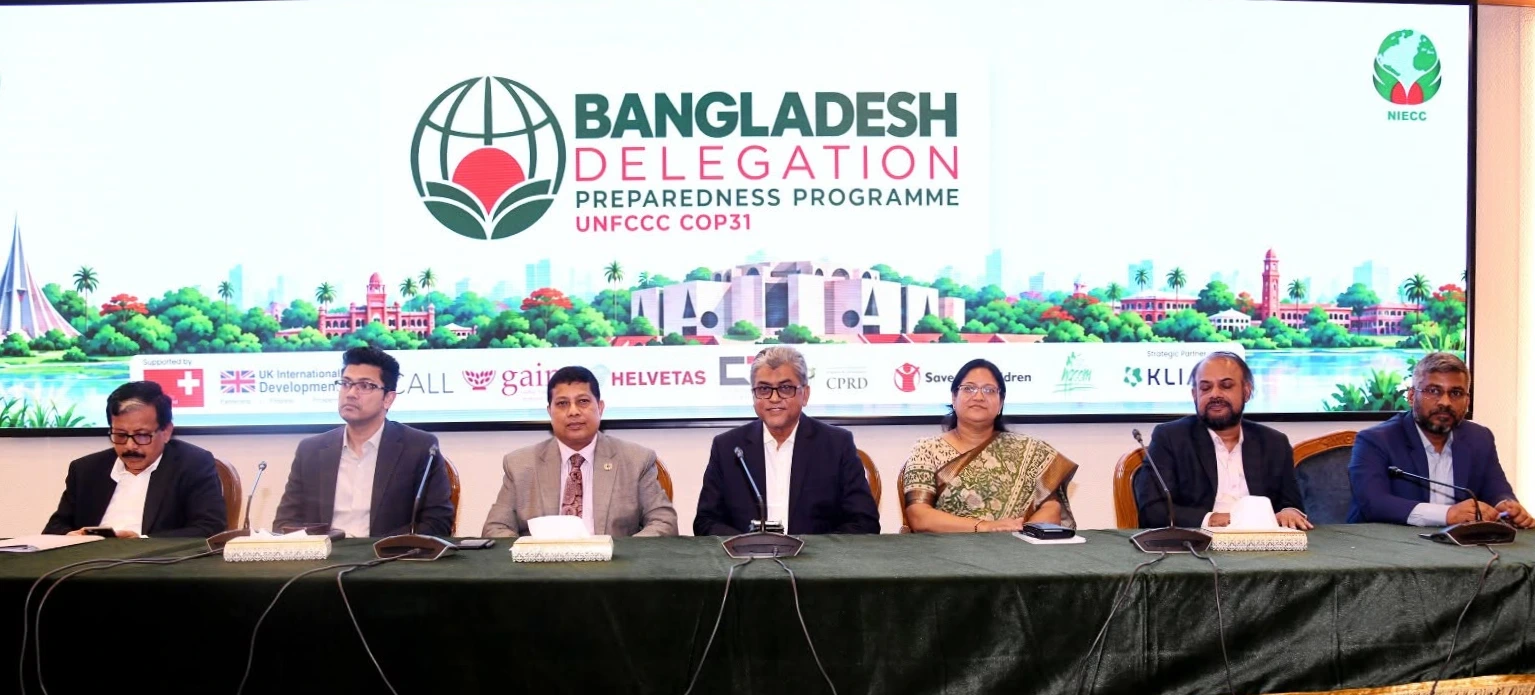
As Strategic Partner, KLIMA led coordination for Bangladesh’s first government-hosted inter-ministerial negotiator preparedness programme, supporting a foundation for annual training and the development of future negotiators.
KLIMA, the climate initiative of The Bangladesh Dialogue Foundation, has supported a significant step towards strengthening Bangladesh’s participation in international climate negotiations through its role as Strategic Partner and lead coordinator of collaboration for the two-day Bangladesh Delegation Preparedness Programme–UNFCCC COP31.
Held on 27–28 October at the Bangladesh Institute of International and Strategic Studies (BIISS), the programme was organised by the National Institute of Environment and Climate Change (NIECC) under the Ministry of Environment, Forest and Climate Change (MoEFCC). It marked Bangladesh’s first government-hosted, inter-ministerial formal training programme specifically focused on climate negotiators and COP negotiations.
KLIMA played a central role in the programme’s preparation and delivery, bringing together government institutions, development partners, national and international non-governmental organisations, technical experts and participants. Through this coordination, KLIMA helped translate a shared commitment to stronger national negotiating capacity into a collaborative platform for learning, preparation and institutional cooperation.
For KLIMA, the programme represents an important step towards connecting international climate diplomacy with Bangladesh’s national priorities and implementation needs. Its contribution centred on supporting a coordinated approach to negotiation preparedness while creating opportunities for knowledge exchange between experienced negotiators and emerging members of Bangladesh’s delegation.
A key outcome was MoEFCC’s confirmation that the preparedness programme will be organised every year ahead of COP. This commitment provides a foundation for making delegation preparation a regular institutional process and sustaining the knowledge, relationships and coordination developed through the initiative.
The programme also announced the introduction of teams organised around negotiating streams, led by experienced negotiators and supported by associate members. Associates will learn through direct engagement with senior negotiators while contributing to preparation and negotiation support. The approach aims to preserve institutional knowledge, transfer experience and develop the next generation of skilled Bangladeshi negotiators.
These outcomes reflect the longer-term value of the collaborative platform KLIMA helped coordinate: preparation that extends beyond a single event and contributes to a lasting national pool of negotiation expertise.
The two-day programme covered the UNFCCC and Paris Agreement negotiating processes, COP31 priorities, climate finance and the New Collective Quantified Goal, adaptation, resilience, loss and damage, mitigation, carbon markets and just transition.
Sessions also addressed climate diplomacy, coalition building, Bangladesh’s strategic positioning and the inclusion of women, children and young people in climate action. Practical negotiation exercises supported participants in applying technical knowledge to the demands of international negotiations.
Discussions emphasised the importance of participating as one coordinated national team, developing evidence-based positions and clearly identifying Bangladesh’s priorities, potential areas of compromise and non-negotiable positions. Strengthening cooperation with the Least Developed Countries Group, the G77 and China, regional partners and other climate-vulnerable countries was another central focus.
The official unveiling of The Climate Negotiator’s Guide at the closing ceremony was a further highlight. The resource is designed to equip negotiators with knowledge and practical insights for international climate negotiations.
KLIMA acknowledges the collective support of the programme’s supporting partners: the Embassy of Switzerland in Bangladesh; British High Commission Dhaka, through UK International Development; Global Alliance for Improved Nutrition (GAIN); Climate Action at Local Level (CALL); HELVETAS Swiss Intercooperation; Center for Participatory Research and Development (CPRD); Save the Children; and Nature Conservation Management (NACOM).
The participation of the Department of Environment, resource persons, technical experts and the youth climate community further strengthened the programme.
The opening ceremony was attended by Mohammad Navid Shafiullah, Additional Secretary, MoEFCC, as Chief Guest, and chaired by Monira Sultana, Joint Secretary, MoEFCC. The closing ceremony brought together senior representatives of MoEFCC, the UK Foreign, Commonwealth and Development Office and the Bangladesh Climate Change Trust.
The programme reinforced the importance of predictable and accessible climate finance, effective implementation of the Global Goal on Adaptation and an effective Fund for Responding to Loss and Damage. It also highlighted renewable energy, technology transfer, capacity building and climate justice as priorities for Bangladesh’s international engagement.
For KLIMA, the measure of effective preparedness is Bangladesh’s ability to influence decisions, build productive partnerships and secure meaningful outcomes for its people. Sustained knowledge sharing, technical coordination and cooperation across institutions will be essential to carrying the programme’s momentum into COP31 and beyond.
— END —
Media Contact
Anonno Afroz
Head of Communications, Media and Public Affairs
The Bangladesh Dialogue
Phone: +880 1785 431944
Email: anonnoafroz2024@gmail.com
Website: https://thebangladeshdialogue.com