
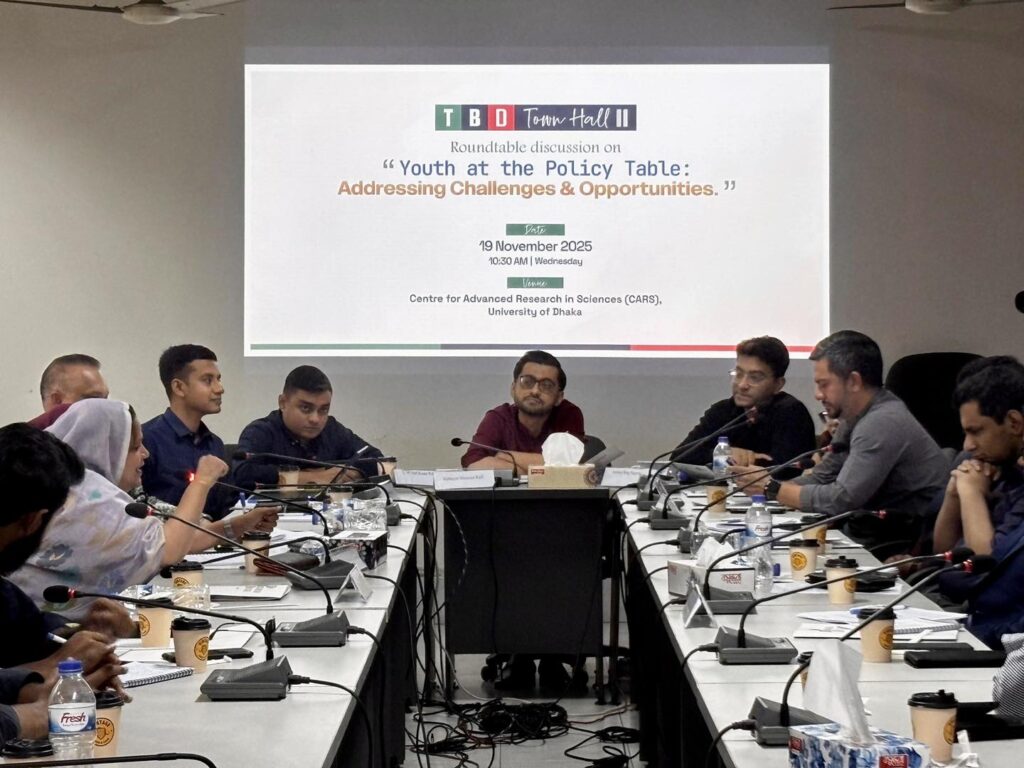
After the inauguration episode of TBD Town Hall, titled “Rallying Towards the Future: Thoughts of Bangladeshi Youth,” with a vision to bring the country’s young voices to the forefront of national discourse, The Bangladesh Dialogue (TBD) convened another dynamic session of its Town Hall series. After the first session’s takeaways, the second episode held on 19 November 2025, convened youth representatives alongside sector specialists. Their collective insights further underscored young citizens’ expectations from future policymakers and provided a substantive basis for shaping the competition framework. Converging, these dialogues laid the groundwork for the “Future Bangladesh Challenge 2025,” ensuring that the competition responded to genuine national concerns articulated by the youth.
At a time when the nation is navigating a complex transition, participants emphasized that meaningful reform must be rooted in inclusivity, accountability, and long-term vision. Across discussions, a unifying theme emerged: development must be people centered, participatory, and aligned with the realities of a changing global context.
Educational Reform and Structural Challenges
Education emerged as one of the most pressing concerns, with participants highlighting deep-rooted structural inefficiencies and stagnation.
Manabendra Deb, Central Committee Member of the Communist Party of Bangladesh, pointed out that despite periodic curriculum revisions every few years, Bangladesh’s education system has not undergone meaningful reform since 2002. He attributed this stagnation to a heavily politicized bureaucracy, which has hindered the adoption of globally relevant teaching methods. Rather than superficially imitating foreign systems, he stressed the importance of understanding and integrating their core principles.
He further highlighted multiple layers of inequality within the system. Access to quality education is often limited to those with financial means, while institutional cultures frequently devalue diverse academic disciplines, creating internal discrimination. The existence of varied ordinances across universities also complicates unified policy reform. Deb emphasized that development and democracy must progress together, requiring greater public participation and accountability.
Dr. Ziauddin Hayder, Former Senior Health Specialist at the World Bank, reinforced the importance of strengthening the foundational stages of education, arguing that without a strong base, the entire system risks collapse. He criticized the prevailing evaluation culture that prioritizes passing students rather than understanding learning gaps. He also emphasized the importance of early childhood nutrition in shaping long-term educational outcomes.
Mohammad Mamunur Rashid, Chairperson and Associate Professor of the Faculty of Law at Eastern University, shifted focus to the purpose of education itself, arguing that the system overproduces certificate holders rather than capable contributors to the economy. He stressed the need to build social capital and ensure that policies include marginalized groups, such as climate refugees, through detailed and inclusive planning.
Adding to this, Meherba Sabrin, Lecturer in the Department of Law at Eastern University of Bangladesh and Director of The Bangladesh Dialogue, emphasized that improving education quality must go hand in hand with proper teacher training, ensuring that reforms are effectively implemented at the classroom LEVEL.
Research, Skills, and Knowledge Gaps
Alauddin Mohammad, Joint Convener of the National Citizen Party, challenged the common narrative that budget constraints are the primary barrier to research advancement. Instead, he argued that the real issue lies in the misalignment between research priorities and real world problems. The pursuit of citations and prestigious publications often diverts attention from practical challenges that require urgent solutions.
Abul Kashem, Chief Reporter at The Business Standard and General Secretary of the Economic Reporters Forum, echoed concerns about the gap between theoretical education and practical skills, particularly in journalism. Despite a large number of graduates in the field, there remains a lack of quality and professional preparedness due to insufficient training. He also raised concerns about bureaucratic inefficiencies, noting that many officials lack adequate legal understanding, which undermines effective governance.
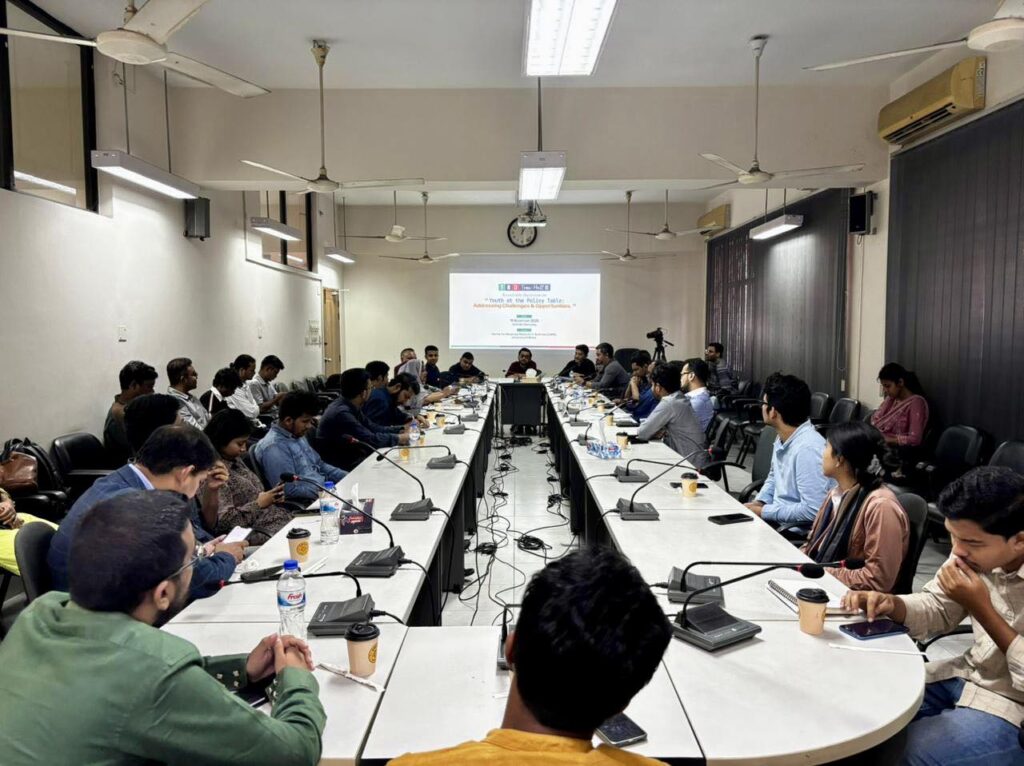
Employment, Economy, and Trust Deficit
Employment and economic participation were identified as critical areas requiring urgent reform. Participants noted that inadequate infrastructure limits individuals’ ability to prepare for the job market, contributing to unemployment and a low quality of life. Despite these challenges, there was optimism about the potential for improvement.
Aslam Beg Sayem, entrepreneur and Director of The Bangladesh Dialogue highlighted that even with significant production, Bangladesh often fails to achieve expected economic returns due to infrastructural weaknesses. He emphasized that development cannot be achieved without active public engagement and criticized systems that limit transparency and participation.
Israfil Khosru, Member of BNP’s International Affairs Subcommittee, expanded on the economic dimension, emphasizing that sound policy must be grounded in stakeholder engagement, including investors, workers, producers, and consumers. He called for reducing bureaucratic barriers to investment and diversifying the economy beyond garments and remittances to sectors such as services, manufacturing, and creative industries. According to him, democratizing economic opportunities is essential for sustainable growth.
Rubayat Mannan Rafi, businessman and Executive Director of The Bangladesh Dialogue, addressed the growing trust deficit between the public and economic actors. He noted that negative perceptions of business communities stem from a lack of engagement and centralization of opportunities. This has led many people to rely more on foreign systems than local ones. He stressed that rebuilding trust requires inclusive platforms, greater participation, and credible democratic processes, including regular and fair elections.
Governance, Participation, and Power Dynamics
Governance discussions revealed widespread concerns about centralization, accountability, and citizen engagement.
Nahida Sarwar Niva, Senior Joint Member Secretary of the National Citizen Party, highlighted that power, resources, and decision making are currently concentrated within a small group. She advocated for a more participatory system where youth and citizens are actively included in policymaking processes.
Abul Kashem reflected critically on recent political developments, noting that despite various initiatives, there has been a tendency among stakeholders, including lawmakers, to prioritize personal interests over genuine development. This has further weakened public trust in institutions.
Ziauddin Hayder suggested shifting from protest-based engagement to more structured dialogues, such as roundtable discussions, to foster constructive policy development.
Health, Well-being, and Social Issues
The discussion also addressed the intersection of education, employment, and mental health. Md. Murtaza Zakiul Abrar, Dr. Murtaza Zakiul Abrar, CBT therapist, private practitioner and former faculty of Bangladesh Medical College, highlighted how poor academic performance and job insecurity contribute to a lack of confidence among students, exacerbating mental health challenges. He also stressed the importance of addressing gender-based violence as a broader societal issue rather than limiting it to women alone.
Ziauddin Hayder pointed to the scarcity of primary healthcare facilities and emphasized that improving the health sector requires not just infrastructure but also better support for technical workers.
Mahmuda Habiba, Joint Secretary of the Jatiyatabadi Krishak Dal and Member of BNP’s Media Cell, added that a significant proportion of university students experience mental stress, underscoring the urgency of addressing psychological well-being alongside academic and economic reforms.
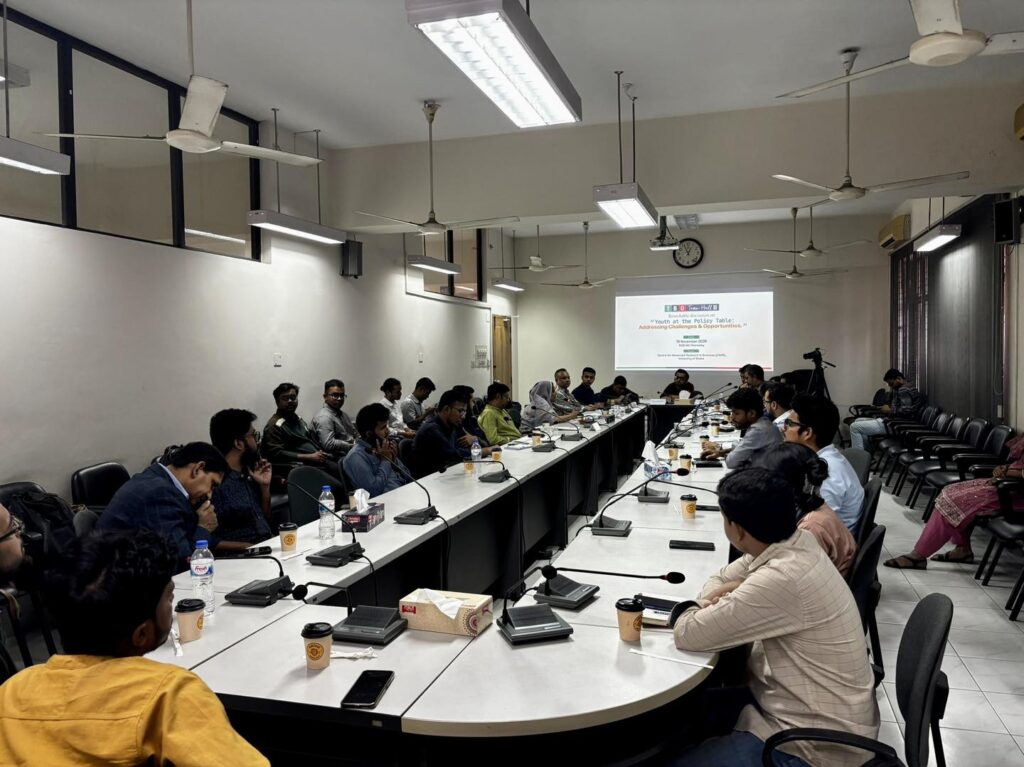
Democracy, Equity, and the Path Forward
Across discussions, democracy and equity remained central themes. Participants emphasized that development and democracy are deeply interconnected. Mahmuda Habiba highlighted the importance of voting rights as the foundation for effective governance and policy implementation. She also stressed that education systems should be aligned with individual needs and competencies rather than imposing uniform expectations.
Israfil Khosru reiterated that democratizing both political and economic systems is essential to ensure inclusivity and long-term stability.
The collective discussions reinforced that equitable development must go beyond economic growth to include fair distribution of opportunities, inclusive policymaking, and strengthened institutional accountability.
Conclusion
The Town Hall served as a powerful reflection of the aspirations, frustrations, and determination of Bangladesh’s youth. Participants called for a shift from symbolic reforms to substantive change grounded in transparency, inclusivity, and practical implementation.
From education and employment to governance and health, the message was clear, Bangladesh’s future depends on its ability to empower its people, bridge institutional gaps, and foster trust between citizens and the state.
As the nation continues its journey toward development, the voices from this Town Hall highlight an urgent need to reimagine systems, prioritize equity, and ensure that progress is both inclusive and sustainable. The path forward lies not in isolated reforms, but in a collective commitment to building a democratic, participatory, and resilient Bangladesh.