
Town Hall Dialogue explores political finance, asset transparency and democratic accountability
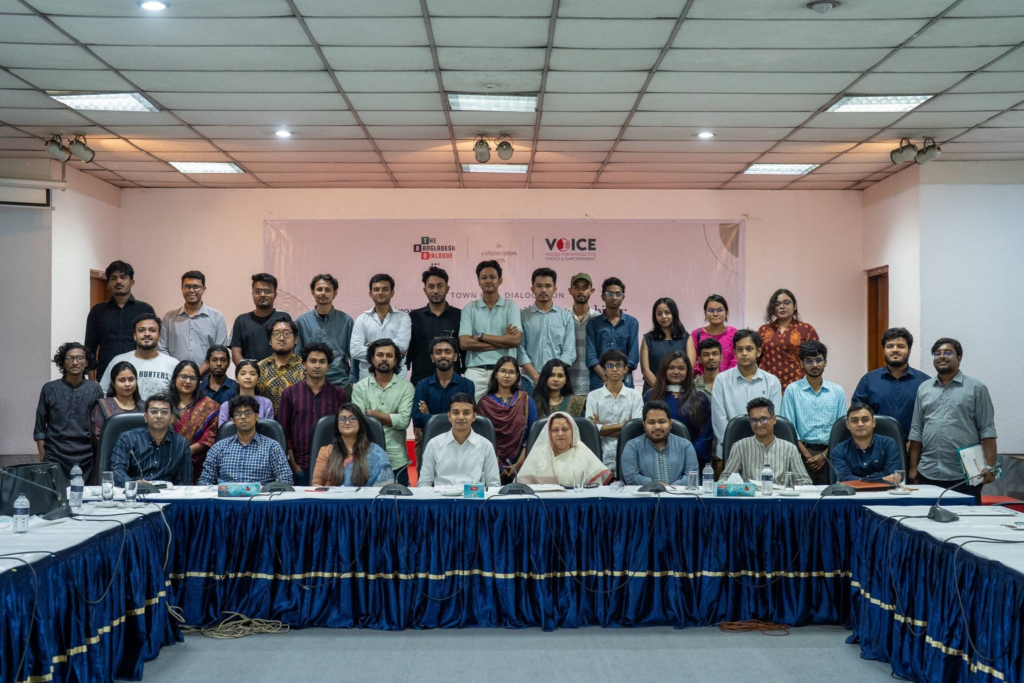
Dhaka, 27 September 2026: Political finance and asset transparency took centre stage at a Town Hall Dialogue on “Strengthening Democratic Accountability: Political Finance & Asset Transparency”, organised by The Bangladesh Dialogue (TBD) in collaboration with Voices for Interactive Choice and Empowerment (VOICE) at the CIRDAP Auditorium in Dhaka.
The discussion brought together researchers, journalists, academics, young participants and parliamentarians to examine how greater transparency in political finance and asset disclosure can contribute to stronger democratic accountability.
The programme featured a keynote presentation by Tasmia Ferdous Tithlee, a participant of the Capacity Building Training Program previously organised under the same project. Drawing on her learning from the JoYEE training sessions, Tithlee presented key insights and recommendations on political finance and asset transparency.
The keynote was followed by an engaging discussion among participants of the Capacity Building Training Programme. They engage with the speakers and parliamentarians. A number of questions were raised on political finance, campaign expenditure, asset disclosure, transparency and accountability, with participants seeking to understand how these issues affect democratic institutions and public trust.
The panel discussion consisted of Mr. Nazmul Ahasan, Executive Editor of Netra News, and Dr. Javed Hossain, Assistant Professor at North South University, who shared their perspectives on political finance, democratic accountability and the importance of greater transparency in political processes.
The discussion later moved to the “Parliamentarians’ Take” session, featuring Mahmuda Habiba, MP, Bangladesh Nationalist Party, and Abdullah Al Amin, MP, National Citizens Party.
Both parliamentarians responded to questions from the participants and shared their perspectives on political finance and democratic accountability.
Mahmuda Habiba, MP, focused on strengthening democratic accountability, transparency and responsible governance. She emphasized the importance of credible elections and voter-backed accountability, particularly in a Parliament with a large number of first time MPs. She highlighted the need for stronger candidate screening, more effective asset disclosure and continuous monitoring of MPs’ wealth and campaign finances. She also addressed the culture of patronage surrounding elected representatives, urging both MPs and citizens to respect fair and lawful processes rather than seeking personal favors. She stressed the importance of an independent and ethical media and an active civil society in monitoring government, while calling for a balanced approach to ICT regulation that protects citizens from online abuse without undermining freedom of expression and privacy. She further discussed the administrative costs associated with development projects and the need for greater public understanding of how government funds are allocated and implemented. Overall, her remarks underscored the shared responsibility of Parliament, political parties, institutions, media, civil society and citizens in building a more transparent, accountable and democratic system of governance.
Abdullah Al Amin, MP, focused on political accountability, transparency, institutional reform and the changing relationship between elected representatives and citizens. He highlighted disparities in constituency development allocations and stressed that transparent communication with constituents can help build trust, even when resources are limited. He called for an end to patronage-based political culture and emphasized the need for politicians to remain closely connected with the people and accountable for their decisions. He also stressed the importance of strengthening independent state institutions and maintaining public and youth vigilance to prevent politicians, bureaucrats and officials from operating without proper oversight. He further emphasized freedom of speech, open dialogue and meaningful civic engagement as essential elements of a more transparent, accountable and reformed Bangladesh.
The open discussion gave participants an opportunity to move beyond prepared remarks and engage directly with the speakers. Questions from the Capacity Building Training Program participants reflected a particular interest in understanding how political finance is regulated, how financial transparency can be ensured, and what mechanisms can strengthen accountability in democratic politics.
The programme concluded with remarks from Aslam Beg Sayem, Secretary, The Bangladesh Dialogue Foundation. In his concluding remarks, Mr. Aslam Beg Sayem focused on strengthening financial and political accountability, asset transparency and democratic awareness in Bangladesh. He criticized the tendency of public and media discourse to focus on sensational issues while overlooking major concerns such as financial mismanagement and money laundering. He emphasized the importance of bringing politicians into open dialogue with citizens and engaging young people in political discussions from an early stage. He also stressed that free, fair, transparent and participatory elections are fundamental to democratic governance, including at the local level. He highlighted the role of an informed and engaged youth in holding political leaders accountable, arguing that stronger public awareness and civic responsibility can contribute to meaningful political and institutional reform.
Reflecting on the discussions and the importance of continued engagement on democratic accountability, political finance and transparency.