
Democratic Governance, Public Welfare, and the State Philosophy of the Bangladesh Nationalist Party — A Comprehensive Policy Analysis
Abstract
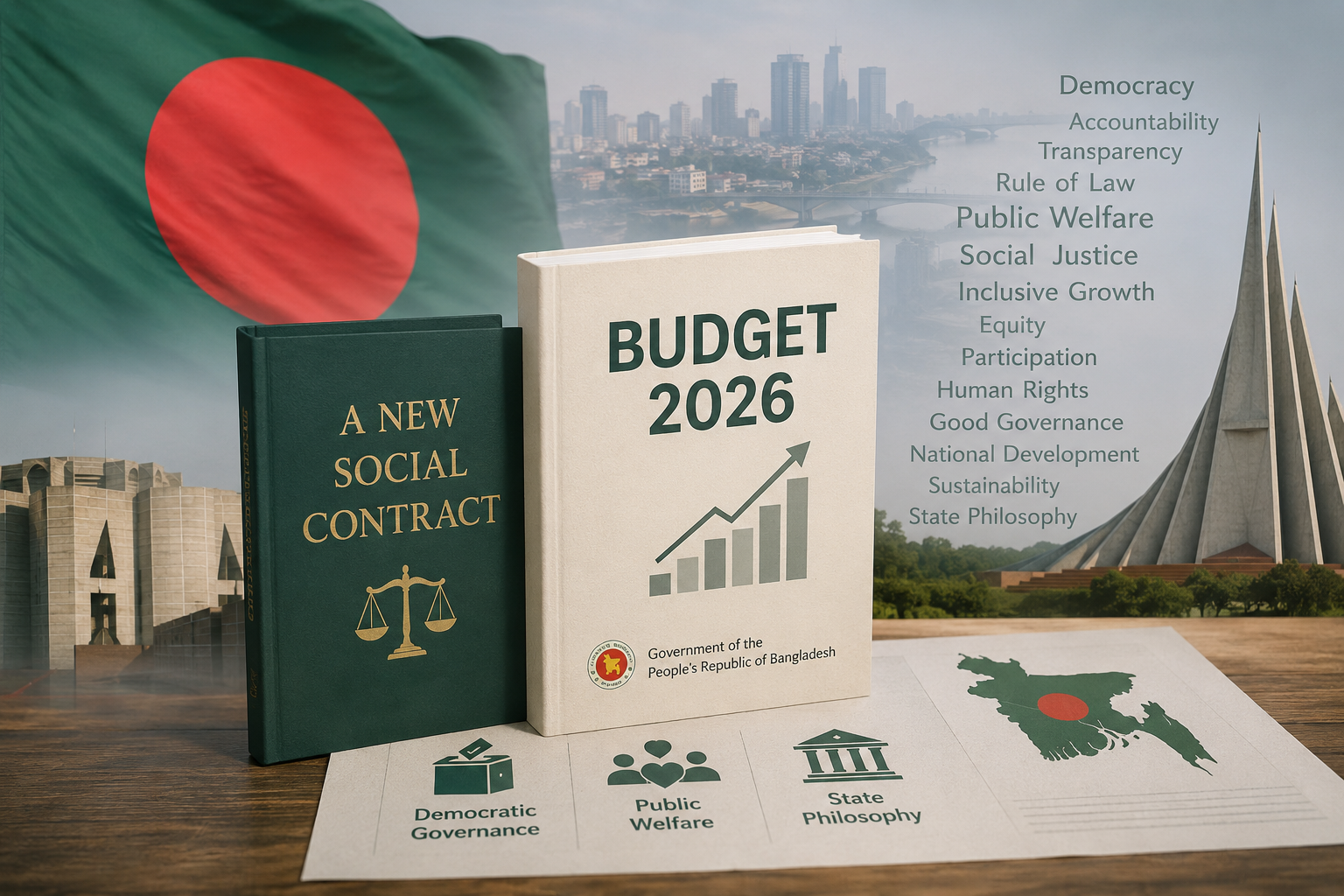
The national budget is never a mere arithmetic of revenue and expenditure — it is the most tangible definition of the relationship between a state and its citizens. This paper argues that the upcoming national budget of June 2026 marks the dawn of a new chapter in Bangladesh’s political-economic history, serving as the concrete expression of a renewed social contract between the government and the people. Following more than fifteen years of unelected and increasingly authoritarian governance, and a subsequent interim administration devoid of electoral mandate, the Bangladesh Nationalist Party (BNP) government — elected through the direct popular vote of the Thirteenth National Parliament Elections in February 2026 — now stands at the threshold of delivering on its transformative pledges. Drawing on the philosophical legacy of Bangladeshi Nationalism, BNP’s 31-Point Reform Agenda, and the party’s comprehensive 2026 Election Manifesto, this paper offers a detailed, data-driven policy analysis of the upcoming budget across macro and microeconomic dimensions. Key programmatic commitments including the Family Card, Farmer Card, River and Canal Excavation Programme, Sports Development Initiative, and Expatriate Card are examined in depth, alongside a roadmap for structural revenue reform, rebalancing social-sector allocations, and the gradual reduction of deficit financing. The paper concludes that Budget 2026, shaped by democratic legitimacy and
anchored in a coherent state philosophy, possesses the institutional and moral capital to become one of the most consequential budgets in Bangladesh’s independent history.
Keywords: Social Contract, Budget 2026, Bangladeshi Nationalism, BNP State Philosophy, 31-Point Agenda, Family Card, Farmer Card, Democratic Governance, Revenue Reform, Macroeconomic Restructuring
1. Introduction: Rebuilding the Broken Covenant Between State and Citizen
The French political philosopher Jean-Jacques Rousseau, in his seminal treatise The Social Contract (1762), articulated a foundational principle of modern governance: the state derives its authority not from conquest or divine mandate, but from the voluntary consent of the governed. Citizens surrender a portion of their natural freedoms in exchange for security, justice, and collective welfare. The annual national budget is perhaps the most material and measurable expression of whether a government is honouring that covenant. It tells us, in precise numerical terms, who the state prioritises, who it neglects, and what values guide its exercise of power.
In Bangladesh, this social contract was profoundly damaged over the course of the past decade and a half. From 2009 to 2024, the Awami League government presided over three successive parliamentary elections that were widely questioned for their democratic integrity — the virtually uncontested election of 2014, the controversial midnight ballot-stuffing of 2018, and the one-sided exercise of 2024. Each of these administrations produced national budgets that lacked the essential democratic legitimacy of a popularly elected mandate. Following the ouster of the Awami League in August 2024, the interim government of Dr. Muhammad Yunus administered the FY 2024-25 budget — again, without any electoral authorisation. In terms of the social contract, this meant that for over fifteen years, Bangladesh’s most important annual policy document was crafted by authorities who owed their position not to the people’s choice, but to other forces.
The Thirteenth National Parliament Elections of February 2026 broke this cycle. The Bangladesh Nationalist Party secured a clear popular mandate in what international observers
described as the most credible Bangladeshi election in well over a decade. For the first time since 2008, a government now sits in Dhaka that must answer directly — at the ballot box — for its economic stewardship. The Budget of June 2026 is therefore not just another annual financial exercise; it is the economic re-inscription of the social contract. It is the moment when the BNP’s sweeping electoral promises must be translated from campaign rhetoric into the hard currency of budget allocations.
This paper analyses Budget 2026 through three interconnected lenses: first, the theory of democratic legitimacy and why it is indispensable for a credible, effective, and just national budget; second, BNP’s state philosophy — rooted in Bangladeshi Nationalism — and how it shapes a distinctive and coherent budgetary vision; and third, the specific, data-backed policy proposals that emerge from BNP’s 31-Point Reform Agenda and 2026 Election Manifesto, particularly the flagship programmatic commitments that will define this budget’s historical character. Drawing on current macroeconomic data, comparative international benchmarks, and the academic literature on fiscal policy and democratic governance, this paper makes the case that Budget 2026 has both the philosophical foundation and the political capital to become a genuinely transformative document for Bangladesh.
2. The State Philosophy of BNP: Bangladeshi Nationalism and its Economic Dimensions
2.1 The Birth and Core Tenets of Bangladeshi Nationalism
The ideological cornerstone of the Bangladesh Nationalist Party is the doctrine of Bangladeshi Nationalism — an inclusive, territory-based, and civic conception of national identity that Shaheed President Ziaur Rahman formally articulated when he founded the BNP on September 1, 1978 (Banglapedia, 2021). Unlike narrower conceptions of nationhood built around a single ethnicity, language, or religious identity, Bangladeshi Nationalism embraces all citizens of Bangladesh — regardless of faith, caste, or communal origin — under the shared banner of being Bangladeshi. This inclusive vision is not merely a political convenience; it reflects a deep philosophical commitment to national sovereignty and the primacy of Bangladesh’s own interests.
According to the BNP’s official international platform, the party’s ideology rests on three foundational pillars: the defence of national sovereignty, the consolidation of democratic governance, and the pursuit of broad-based economic prosperity (BNP-BD.org, 2024). These are not independent objectives — they form an integrated framework in which genuine democracy is understood to be a precondition for sustainable economic development, and national sovereignty provides the context within which both democracy and development must be pursued on Bangladesh’s own terms.
The economic dimension of Bangladeshi Nationalism is particularly significant for understanding BNP’s approach to fiscal policy. President Ziaur Rahman articulated what he called a ‘Peaceful Revolutionary Economic System’ — a recognition that Bangladesh’s post- independence economy, distorted by the structural legacies of colonial extraction and misguided post-independence nationalisation policies, required not incremental adjustment but a fundamental reorientation (Wikipedia – Bangladeshi Nationalism, 2026). The three pillars of this economic reorientation were: the recognition of private enterprise as the primary engine of economic growth, the prioritisation of agriculture and the rural economy as the foundation of broad-based development, and the insistence on placing national interest above any form of external pressure or conditionality.
In practice, President Ziaur Rahman implemented these principles with considerable effect. He denationalised industries that the preceding government had taken into state ownership, introduced agricultural subsidies and modernisation support, launched the celebrated Khal Khanan (canal excavation) volunteer movement that dramatically improved rural irrigation, and opened Bangladesh to foreign direct investment through liberalised regulatory frameworks (BJAF-BNP, 2024). The economic recovery Bangladesh experienced in the late 1970s and early 1980s owes much to this coherent, nationally-grounded development philosophy. BNP’s 2026 Election Manifesto, bearing the headline Bangladesh Before All, is the modern continuation of this same tradition — a declaration that every economic policy must ultimately be judged by its impact on the lives of ordinary Bangladeshis.
2.2 Bangladeshi Nationalism and the Theory of the Social Contract: A Convergence
There is a compelling theoretical convergence between the philosophical underpinnings of Bangladeshi Nationalism and the social contract tradition in Western political philosophy. Both frameworks insist that the state’s authority is conditional — dependent on its active service to the welfare of those it governs. Rousseau’s general will (volonte generale) finds a practical equivalent in BNP’s Bangladesh Before All doctrine: the idea that the collective interest of the Bangladeshi people must always supersede the particular interests of any political class, economic oligarchy, or foreign power.
The Nobel Prize-winning economist Amartya Sen, in Development as Freedom (1999), demonstrated that democratic accountability is not merely instrumentally useful for economic development — it is constitutively part of what development means. People cannot be said to be truly developed if they lack the political freedoms to shape the decisions that govern their lives. From this perspective, a budget produced by a democratically elected government is not just formally more legitimate than one produced by an unelected authority — it is substantively more likely to serve human development, because elected governments face the discipline of re-election and must be responsive to popular needs.
John Rawls, in A Theory of Justice (1971), argued that a just society is one organised so as to maximise the welfare of its least advantaged members — what he called the ‘difference principle.’ BNP’s flagship social protection programmes — the Family Card, the Farmer Card, and the expanded social safety net — are, in Rawlsian terms, precisely the kind of redistributive instruments that a just state should deploy. Nobel laureate Joseph Stiglitz has similarly argued that markets alone cannot deliver social justice and that active state intervention in the form of public investment, social insurance, and regulatory governance is indispensable for equitable growth (Stiglitz, 2012). BNP’s budgetary philosophy, which combines market-friendly economic management with robust social protection, reflects exactly this synthesis.
The 2026 BNP Election Manifesto was developed through the integration of Shaheed President Ziaur Rahman’s 19-Point Programme, Begum Khaleda Zia’s Vision 2030, BNP’s 27- Point Proposal, and the July National Charter — making it not the vision of one individual but the accumulated political-economic wisdom of a party with nearly five decades of governance experience (BNP Official Website, 2026). Budget 2026 is the first opportunity to translate this accumulated wisdom into action.
3. The Structural Failures of Past Budgets: A Statistical Reckoning
3.1 The Revenue Crisis: A Chronic Underperformance
Any serious analysis of Bangladesh’s budgetary landscape must begin with what is arguably the country’s most enduring and consequential macroeconomic failure: its chronically low tax-to-GDP ratio. According to the World Bank’s most recent analysis, Bangladesh’s tax-to- GDP ratio for FY 2024-25 stands at a mere 6.7 percent (World Bank, 2025). The internationally accepted minimum threshold for a country to finance adequate public services and development investment is generally placed at around 15 percent — Bangladesh has been operating at less than half of this minimum for years.
The regional comparison makes this failure even more stark. India’s tax-to-GDP ratio stands at approximately 12 percent; Nepal has achieved 17.5 percent; Bhutan manages 12.3 percent; and even Pakistan, with its well-documented fiscal challenges, has reached 7.5 percent (Dhaka Tribune, 2024). Bangladesh, despite possessing a larger and more dynamic economy than several of these comparators, lags behind all of them. This is not a reflection of economic incapacity — it is a reflection of political failures in revenue mobilisation.
The trajectory of Bangladesh’s tax-to-GDP ratio over the past decade is even more alarming than the current snapshot. In 2011, when Bangladesh’s tax-to-GDP ratio stood at 11 percent, the country’s per capita GDP was significantly lower than it is today. By 2023, despite per capita GDP having roughly doubled, the ratio had fallen to 8.3 percent (The Daily Star, 2024). This inverse relationship — rising prosperity accompanied by falling revenue effort — is a telltale signature of politically motivated tax exemptions, regulatory capture by business lobbies, and a systematic failure of governance in tax administration. The National Board of Revenue’s own research reveals that tax expenditures (the revenue foregone through exemptions and concessions) amounted to
3.56 percent of GDP in direct taxes alone in FY 2021-22, with total tax expenditure potentially exceeding 5 percent of GDP when indirect taxes are included (NBR, 2024). The country is effectively giving away through exemptions almost as much as it collects in taxes. Dr. Ahsan H. Mansur, Executive Director of the Policy Research Institute, has been unambiguous on this point: ‘Political-economic considerations have repeatedly derailed tax reform’ (TBS News, 2023).
3.2 Social Sector Neglect: The Human Cost of Unaccountable Governance
The most immediate and painful consequence of Bangladesh’s revenue deficit is the chronic under-investment in the social sectors that most directly determine the quality of life of ordinary citizens. Education is the starkest example. Over the past five fiscal years, Bangladesh’s education allocation has been confined to a narrow band of 1.69 to 1.83 percent of GDP — consistently less than one-third of UNESCO’s recommended minimum of 4 to 6 percent of GDP, or 15 to 20 percent of total public expenditure (Prothom Alo, 2024). Among 189 World Bank member countries, Bangladesh ranks among the ten lowest spenders on education as a share of GDP — placing it in the company of conflict-affected states such as Haiti, Somalia, and South Sudan (Prothom Alo, 2024). Among 38 Least Developed Countries, Bangladesh stands at the third-lowest position on this metric (LightCastle, 2024). For a country that aspires to middle- income status and beyond, this is a damning indictment.
The health sector tells a similar story. In FY 2024-25, total health sector allocations amounted to BDT 41,408 crore — just 5.1 percent of total public expenditure and barely 1 percent of GDP (LightCastle, 2024). The World Health Organization estimates that providing even basic healthcare to every Bangladeshi citizen requires annual per capita public spending of USD 88; current government spending amounts to only USD 58 per capita, and of this, approximately two- thirds (USD 39) comes not from public funds but from citizens’ own out-of-pocket payments (Prothom Alo, 2024). Professor Syed Abdul Hamid of the Health Economics Institute at the University of Dhaka has observed that ‘health was not a priority for policymakers. The COVID- 19 pandemic briefly attracted attention, but this focus quickly dissipated’ (Prothom Alo, 2024).
The implementation gap compounds the allocation gap. In FY 2024-25, by April 2025, the Medical Education and Family Welfare Division had spent a mere 2.34 percent of its revised Annual Development Programme (ADP) allocation — the lowest of any ministry. The Health Services Division had managed only 14.9 percent, against a national average of 41.31 percent (The Daily Star, 2025). These figures reveal that the problem is not only insufficient allocation but a systemic failure of delivery — a failure that is inseparable from the political context of unaccountable governance.
3.3 The Deficit Trap: Structural Dependence on Bank Borrowing
Bangladesh has run a budget deficit in every single year since independence. In FY 2023- 24, the budget deficit reached 5.2 percent of GDP, and of this, 85.2 percent was financed by borrowing from the domestic banking sector (CPD, 2023). This pattern of bank-financed deficit spending is a textbook recipe for macroeconomic instability. When the government crowds private borrowers out of the credit market to finance its own deficit, the cost of credit for businesses rises, investment falls, and economic growth is constrained — the so-called crowding-out effect. When excess money supply is created through bank lending to the government, inflationary pressure builds. In FY 2023-24, Bangladesh’s average annual inflation exceeded 9.7 percent — a figure that represents a devastating erosion of the purchasing power of low-income families, for whom food and basic necessities constitute the majority of household expenditure.
The structural nature of this deficit trap is important to understand. It is not primarily a consequence of Bangladesh being poor — it is a consequence of Bangladesh’s persistent failure to mobilise adequate tax revenue. A government that cannot collect sufficient taxes must borrow, and borrowing from the banking sector generates inflation, which acts as a hidden tax on the most vulnerable citizens. Breaking this cycle requires exactly the kind of structural revenue reform that BNP has committed to in its 31-Point Agenda and Election Manifesto.
Table 1: Bangladesh’s Key Budget Indicators — A Five-Year Trend (FY 2020-21 to FY 2024-25)
| Indicator | FY21-22 | FY22-23 | FY23-24 | FY24-25 |
| Tax-to-GDP Ratio | 8.3% | 8.3% | 9.7%* | 6.7%** |
| Budget Deficit (% of GDP) | 5.1% | 5.1% | 5.2% | 4.6% |
| Education Allocation (% of GDP) | 1.83% | 1.82% | 1.76% | 1.69% |
| Health Allocation (% of GDP) | 0.94% | 0.98% | 1.00% | 1.02% |
| Bank Financing (% of deficit) | 73.0% | 79.3% | 85.2% | 82.3% |
| Average Annual Inflation | 6.15% | 8.71% | 9.73% | ~9.5% |
| ADP Implementation Rate (avg.) | 86.3% | 83.7% | 82.4% | 41.3%*** |
* Target figure. ** Latest actual rate per World Bank and NBR data. *** As of April 2025. Sources: CPD (2023), World Bank (2025), LightCastle (2024), Bangladesh Bank (2024), NBR (2024).
4. BNP’s 31-Point Agenda and 2026 Election Manifesto: The Blueprint for a New Social Contract
4.1 The 31-Point Reform Agenda: An Anatomy of Structural Transformation
The BNP’s 31-Point Outline for Structural Reforms in Bangladesh, formally presented by Acting Chairman Tarique Rahman on July 23, 2023, is one of the most comprehensive and substantive policy documents produced by any Bangladeshi political party in the post- independence era. It is, in effect, a detailed blueprint for the reconstruction of Bangladesh’s democratic institutions, governance architecture, and socioeconomic framework (BNP Official Website, 2024). For the purposes of Budget 2026, several points in this agenda carry particular weight and direct budgetary implications.
Point 15 of the 31-Point Agenda calls for the establishment of an Economic Reform Commission — an independent body mandated to produce long-term policy recommendations on tax structure reform, subsidy rationalisation, the restructuring of state-owned enterprises, and the reduction of excessive dependence on foreign borrowing (BSS News, 2024). This commission would institutionalise the process of revenue reform, removing it from the ad hoc political bargaining that has historically frustrated it. Point 11 calls for an Administrative Reform Commission, which would address the systemic inefficiencies in government expenditure management, procurement, and project implementation. Point 13 proposes the appointment of an Ombudsman — an independent oversight authority with real powers to investigate complaints against public administration and to monitor budget implementation. Together, these three institutional proposals represent a fundamentally different approach to fiscal governance: one based on accountability, transparency, and meritocracy rather than on political patronage.
The social welfare dimensions of the 31-Point Agenda are equally significant for budget policy. The agenda commits BNP to ensuring inflation-adjusted fair wages for workers, eliminating child labour, achieving universal health coverage, and reviving shuttered industrial facilities including jute mills, textile mills, and sugar mills that have been left idle — depriving their workers and surrounding communities of livelihoods (Bangladesh Centre, 2024). Each of these commitments has a concrete budgetary cost and a concrete budgetary benefit in terms of reduced poverty, increased productive capacity, and social stability.
4.2 The 2026 Election Manifesto: Bangladesh Before All — Five Pillars of National Renewal
BNP’s 2026 Election Manifesto, released under the headline Bangladesh Before All on February 6, 2026 at a ceremony in Dhaka presided over by Acting Chairman Tarique Rahman, is organised around five thematic pillars: state reform and good governance; social and economic justice; sustainable economic recovery; balanced regional development; and environmental and climate resilience (Prothom Alo, 2026). This structure reflects a sophisticated and integrated understanding of development: that economic growth cannot be sustainable without governance reform, that governance reform is incomplete without social justice, and that both are threatened by environmental vulnerability.
The manifesto’s most ambitious economic commitment is the target of transforming Bangladesh into a USD 1 trillion economy by 2034 — a goal that would require average annual GDP growth of between 8 and 9 percent (RTV Online, 2026). Achieving this would necessitate a fundamental structural shift in the growth model: away from consumption-driven growth toward investment-led growth, and away from a near-total dependence on garment exports toward a diversified, value-added export economy. Budget 2026 is the critical first step in establishing the fiscal foundations for this transformation.
On governance, the manifesto breaks important new ground. It commits BNP to a zero- tolerance policy on corruption, to transparent and open competitive procurement, to real-time audit mechanisms for government projects, to the establishment of a Truth and Reconciliation Commission to address abuses of the past, to the restoration of a neutral caretaker government arrangement for future elections, and to a constitutional cap of two terms on the tenure of any Prime Minister (New Age BD, 2026). These governance commitments matter enormously for budget credibility — a government that is serious about accountability in its own political conduct is far more likely to implement a budget with the transparency and discipline that public money demands.
The manifesto also pledges BNP to the creation of one crore (ten million) new jobs over the course of its five-year term, with employment exchange centres established at district and upazila levels (New Age BD, 2026). Providing unemployment allowances to educated youth, establishing a pension fund for private sector workers, and creating special funds for the welfare
of orphaned children, disabled citizens, and elderly people without support structures are additional social protection commitments that will require significant and sustained budgetary allocation.
5. BNP’s Flagship Programmes: The Visible Face of the New Social Contract
5.1 The Family Card: Direct State Support for Bangladesh’s Most Vulnerable
Of all the programmatic commitments in BNP’s 2026 Election Manifesto, the Family Card has attracted the greatest public attention — and rightly so. In its essence, the Family Card is a direct income support scheme for low-income and marginalised families, providing BDT 2,500 per month in essential goods or an equivalent cash transfer, with the amount to be progressively increased over time (Prothom Alo, 2026). The card will be issued in the name of the female head of the household — a deliberate policy design choice that simultaneously addresses poverty and women’s economic empowerment.
The transformative potential of the Family Card lies not only in what it provides, but in how it will be delivered. The BNP government is committed to a fully digital Government-to- Person (G2P) transfer mechanism — direct payments through mobile financial services or bank accounts, bypassing the layers of bureaucratic intermediaries and local political brokers who have historically siphoned off a significant share of social protection funds (The Daily Star, 2026). Currently, Bangladesh operates approximately 100 separate social protection programmes with overlapping mandates, fragmented databases, duplicate beneficiary registrations, and widely documented leakage. The Family Card is designed to consolidate and rationalise this fragmented landscape into a single, verifiable, and accountable system.
The importance of this reform cannot be overstated. According to LightCastle Partners’ analysis, approximately 46 percent of Bangladesh’s social safety net expenditure currently flows not to the genuinely poor but to pension payments for retired government officials, interest payments on government savings instruments, and agricultural subsidies — leaving a much smaller share for targeted poverty relief (LightCastle, 2024). Dr. Ziauddin Hyder, a former World Bank health specialist and BNP policy adviser, has observed: ‘The existing programmes suffer
from serious targeting failures. Genuinely poor households are excluded, while others receive multiple benefits. The Family Card offers a systematic solution — getting the right support to the right people, and eliminating waste’ (Prothom Alo, 2026). Budget 2026 must establish a dedicated, ring-fenced allocation for the Family Card, with a clear rollout schedule and independent monitoring mechanisms.
5.2 The Farmer Card: Economic Security for the Backbone of Rural Bangladesh
The second flagship social programme in BNP’s manifesto is the Farmer Card — a comprehensive support package targeting Bangladesh’s agricultural households, including crop farmers, fishermen, livestock farmers, and small agro-entrepreneurs. The Farmer Card provides: government-mediated price support for agricultural produce; seasonal input subsidies of BDT 2,000 to 2,500; access to low-cost agricultural credit; crop insurance cover; government-supported marketing assistance; and a commitment to waive agricultural loans of up to BDT 10,000 (principal and interest) for small-scale farmers (BSS News, 2026). The card is intended to cover the entirety of Bangladesh’s agricultural workforce — a population that constitutes between 38 and 40 percent of total employment and contributes approximately 12 percent to GDP.
The significance of the Farmer Card in the context of BNP’s state philosophy is profound. Agriculture was the centrepiece of Shaheed President Ziaur Rahman’s rural development vision. His government’s agricultural subsidies, technology dissemination, and irrigation improvement initiatives produced measurable improvements in rural productivity and food security. The Farmer Card is the modern, institutionalised, and digitally-enabled successor to that tradition — transforming what was once a discretionary, patron-client form of rural support into a rights-based entitlement with clear eligibility criteria, transparent delivery mechanisms, and performance accountability. The BNP government has already announced that the Farmer Card’s pre-pilot phase will reach 25,000 farmers across nine upazilas in eight districts beginning in April 2026 (The Daily Star, 2026) — demonstrating a commitment to phased, evidence-based implementation rather than mere announcement.
5.3 The River and Canal Excavation Programme: Environment, Agriculture, and Employment in One
Few commitments in BNP’s 2026 Manifesto are as historically resonant, or as practically significant, as the pledge to excavate and restore 20,000 kilometres of rivers, canals, and water bodies over the five-year term (Bonikbarta, 2026). This programme operates simultaneously on three developmental dimensions that are rarely addressed in a single initiative.
From an environmental perspective, the silting and encroachment of Bangladesh’s river network — once the most extensive and fertile in the world — is one of the country’s most acute long-term crises. Degraded waterways compromise flood control, reduce biodiversity, accelerate salinity intrusion in coastal areas, and diminish the hydrological connectivity that Bangladesh’s entire agricultural system depends on. The restoration of 20,000 kilometres of waterways would represent the largest single environmental intervention in Bangladesh’s history.
From an agricultural perspective, restored waterways directly improve irrigation availability, support fisheries production, and reduce crop losses from waterlogging. From an employment perspective, the sheer scale of the excavation programme — requiring labour across every district simultaneously — makes it the largest rural employment guarantee in Bangladesh’s post-independence history.
This programme carries deep historical significance for BNP. President Ziaur Rahman’s Khal Khanan (canal digging) initiative of the late 1970s and early 1980s, implemented through a combination of state resources and voluntary community labour, is widely remembered as one of the most successful rural development programmes in Bangladesh’s history (BJAF-BNP, 2024). The current programme carries forward that legacy with modern machinery, systematic planning, and nationwide coordination. The BNP government has already inaugurated the programme simultaneously in 54 districts (The Daily Star, 2026) — translating an electoral promise into ground-level action within months of taking office. Budget 2026 must ensure that the Ministries of Local Government and Rural Development, Water Resources, and Environment receive commensurate allocations to sustain this nationally significant programme.
5.4 The Sports Development Initiative: Nation-Building Through Youth
The prominence given to sports development in BNP’s 2026 Manifesto reflects a sophisticated understanding of how national identity, youth welfare, and long-term human capital development intersect. The manifesto’s sports commitments include: making physical education compulsory from Grade 4 onwards; establishing a ‘Notun Koori Krira’ scholarship for talented students between the ages of 12 and 14; constructing ‘Sports Villages’ with indoor facilities in all 64 districts; appointing dedicated sports officers at upazila level; establishing branches of the Bangladesh Krira Shikkha Protisthan (BKSP) in every administrative division; and creating a National Sports Research Institute (New Age BD, 2026).
From a policy economics perspective, investment in sports infrastructure generates returns that extend far beyond athletic achievement. Sports participation is associated with improved mental health outcomes, reduced incidence of substance abuse, stronger social cohesion, lower rates of youth unemployment-related social disorder, and the development of marketable skills such as teamwork, discipline, and leadership. At the community level, sports facilities generate local economic activity — in construction, maintenance, coaching, equipment retail, and event management. At the national level, international sporting success functions as a form of soft power, enhancing Bangladesh’s profile and contributing to tourism and cultural diplomacy. Budget 2026 should deliver a substantially increased allocation to the Ministry of Youth and Sports — at minimum doubling the current share of less than 0.3 percent of total public expenditure (LightCastle, 2024).
5.5 The Expatriate Card and Digital Economy Initiatives: Opening New Revenue Frontiers
BNP’s 2026 Manifesto commits the party to creating an Expatriate Card for Bangladeshis working abroad — a dedicated benefits package that would provide priority services at airports and public offices, special healthcare privileges, facilitated access to investment credit in Bangladesh, educational quotas for their children, and structured skills and language training for prospective migrants (BSS News, 2026). The economic rationale is straightforward: remittances are Bangladesh’s second largest source of foreign exchange, and the Expatriate Card is designed to make legal, formal-channel remittance transmission significantly more attractive than informal hawala and hundi networks.
On the digital economy front, the manifesto commits BNP to activating international payment gateways (including platforms comparable to PayPal), establishing regional e-commerce hubs, and promoting ‘Made in Bangladesh’ digital exports (Bonikbarta, 2026). These commitments are particularly important in the context of Bangladesh’s impending LDC graduation, which will reduce the preferential market access that has underpinned export growth to date. Building digital export capacity is one of the most cost-effective strategies for maintaining export competitiveness. Budget 2026 must allocate meaningfully to the information and communications technology sector
- not merely for hardware and connectivity infrastructure, but for the software, platform development, and digital skills training that constitute the true engine of a digital economy.
6. The Macroeconomic Framework: Revenue Reform, Expenditure Quality, and Deficit Reduction
6.1 Structural Revenue Reform: Three Pathways to a Higher Tax-to-GDP Ratio
The most urgent macroeconomic challenge facing the BNP government — and the precondition for virtually every other element of its programme — is the structural reform of Bangladesh’s revenue mobilisation system. The NBR’s own medium-term revenue strategy targets a tax-to-GDP ratio of 10.5 percent by FY 2034-35 (The Daily Star, 2025), and meeting the conditions attached to the IMF’s USD 4.7 billion Extended Credit Facility programme requires demonstrable progress on revenue mobilisation as an immediate priority.
The first and most immediately achievable pathway is the rationalisation of tax expenditures. As noted above, Bangladesh’s total tax expenditure (revenue foregone through exemptions and concessions) may approach or exceed 5 percent of GDP. World Bank analysis confirms that tax expenditures in Bangladesh are of broadly equivalent magnitude to actual tax collections — a paradox that reflects the capture of the tax exemption system by politically connected business interests (World Bank, 2025). Capping total tax expenditure at no more than 1 percent of GDP — a reform that would require political courage but is entirely achievable given BNP’s strong electoral mandate — could yield additional revenue of up to 4 percentage points of
GDP, sufficient to transform Bangladesh’s social sector funding landscape overnight (The Daily Star, 2024).
The second pathway is broadening the direct tax base. Bangladesh’s direct tax-to-GDP ratio of 2.62 percent compares disastrously with the South Asian average of 4.6 percent and the global average of 8.5 percent (The Daily Star, 2025). Progressive wealth taxes, capital gains taxation, inheritance taxes, and property tax reform could substantially increase direct tax revenue while simultaneously reducing wealth concentration — addressing both the fiscal and the equity dimensions of Bangladesh’s development challenge. The NBR’s own reform plans envision raising the direct tax share to 42 percent of total tax revenue by 2031.
The third pathway is the digitisation of tax administration. BNP’s strong commitment to the digital economy — articulated throughout its manifesto — provides a natural political context for the comprehensive digitalisation of NBR’s operations. The recent institutional reform separating tax policy from tax administration is a structurally sound development; full digital processing of income tax returns, VAT declarations, and customs clearances would reduce leakage, lower compliance costs for small businesses, expand the taxpayer base, and build the kind of data infrastructure that enables evidence-based tax policy. Bangladesh’s revenue administration has the technical capacity to implement these reforms — what has historically been missing is political will.
6.2 Expenditure Quality: From Volume to Value
BNP’s approach to public expenditure must be guided by the principle of smart spending rather than simply more or less spending. The social sectors require substantially larger allocations
- but those larger allocations will only produce better outcomes if accompanied by genuine improvements in delivery, accountability, and implementation capacity. BNP’s institutional commitments — the Ombudsman, the Administrative Reform Commission, the zero-tolerance anti-corruption policy, the single-window clearance system, and performance-based project auditing — provide the governance architecture within which increased social spending can actually be translated into improved health, education, and welfare outcomes.
The Annual Development Programme (ADP) implementation problem deserves particular attention. An ADP implementation rate of 41.31 percent as of April 2025 (The Daily Star, 2025)
- meaning that almost three-quarters of the way through the fiscal year, barely two-fifths of the development budget has been spent — is not primarily a capacity problem. It reflects political dysfunction, rent-seeking in procurement, and the absence of serious performance management. The BNP government’s commitment to real-time project auditing and results-based management, if effectively implemented, could dramatically improve both the pace and the quality of development expenditure.
6.3 A Five-Year Roadmap for Deficit Reduction
Eliminating Bangladesh’s budget deficit overnight is neither achievable nor desirable — a developing country with vast unmet investment needs requires some degree of deficit financing. The goal is not austerity but fiscal discipline: gradually reducing the deficit as a share of GDP while simultaneously shifting the composition of deficit financing away from inflationary bank borrowing toward non-inflationary alternatives. A realistic medium-term deficit reduction path might target: FY 2026-27 at 4.3 percent of GDP; FY 2027-28 at 4.0 percent; FY 2028-29 at 3.7 percent; and FY 2030-31 at below 3.0 percent — broadly consistent with the IMF programme framework.
The critical parallel shift must be in the financing of whatever deficit remains. Reducing bank borrowing as a share of deficit financing from its current 82-85 percent to below 60 percent within three years would materially reduce the inflationary impact of deficit spending. This requires developing Bangladesh’s domestic bond market, expanding concessional multilateral borrowing, attracting foreign direct investment through the governance and regulatory improvements that BNP’s manifesto commits to, and utilising National Savings Certificates more judiciously. Each of these alternatives imposes less monetary expansion and therefore less inflationary pressure than direct bank borrowing.
7. Sectoral Budget Priorities: A Microeconomic Analysis
7.1 Education: The Highest-Return Investment in the Nation’s Future
The economic returns to investment in education are well-established and robust. World Bank analysis consistently shows average annual returns to education investment exceeding 10
percent — higher than returns to most financial instruments and most categories of physical infrastructure. Bangladesh is uniquely positioned to capitalise on a demographic dividend — with approximately 35 percent of its population below the age of 25 — but this dividend will turn into a demographic liability if the country fails to invest adequately in the education and skills development of these young people.
BNP’s manifesto commitments on education are substantial. The pledge to provide free education for women up to the postgraduate level is historically unprecedented in Bangladesh’s educational policy — implementing it will require a significant and sustained increase in educational allocation. The ‘Mid-Day Meal’ programme, which research consistently shows to improve school attendance, reduce dropout rates, and enhance cognitive performance, will require substantial recurrent funding. The expansion of technical and vocational education and training (TVET) — currently covering only 19 percent of eligible students (The Daily Star, 2025), compared with regional peers at 30 to 45 percent — is essential for aligning the education system with the skill requirements of Bangladesh’s industrialising economy.
Budget 2026 should set an immediate target of raising education expenditure to at least 2.0 percent of GDP and 14 percent of total public expenditure — a meaningful increase from the current 1.69 percent of GDP, and a credible step toward the UNESCO minimum benchmark. The Bangladeshi Nationalist philosophy of self-reliance (swanirvarata) cannot be realised without a literate, skilled, and educated citizenry; education investment is, in this sense, not merely an economic policy but an expression of the core national vision.
7.2 Health: Toward Universal Coverage Through Sustained Investment
BNP’s manifesto commits the party to universal health coverage, a health card for every citizen, and the recruitment of 100,000 new healthcare workers (BSS News, 2026). The Health Reform Commission has recommended eventually raising the health budget to 15 percent of total public expenditure or 5 percent of GDP (The Daily Star, 2025) — an ambitious long-term target that Budget 2026 should formally adopt as a multi-year commitment, with an immediate step to at least 1.5 percent of GDP in the current fiscal year.
The 100,000 healthcare worker recruitment pledge deserves special emphasis because it directly addresses what Professor Syed Abdul Hamid has identified as the most fundamental
structural failure of Bangladesh’s health system: the human resource crisis. Bangladesh has built health facilities across the country, but has systematically failed to staff them. A 200-bed district hospital without adequate doctors and nurses serves no one. Recruiting, training, deploying, and retaining 100,000 health workers — distributed equitably to underserved rural and coastal areas
— would transform the functional capacity of Bangladesh’s entire public health infrastructure. Combined with investment in telemedicine to reach the most remote communities, and with strengthening of primary healthcare centres as the first line of treatment, this would represent the most significant single improvement in the equity of Bangladesh’s health system since independence.
7.3 Agriculture, Export Diversification, and Private Investment
BNP’s agricultural vision, as articulated in the Farmer Card programme and the broader manifesto, is to move beyond subsistence-level support for farmers toward active economic empowerment — transforming agriculture from a source of rural poverty into a source of rural prosperity. Budget 2026 should increase the overall agriculture sector allocation to between 6.5 and 7.5 percent of total public expenditure (from the current approximately 5.3 percent), with specific ring-fenced funding for the Farmer Card implementation, climate-resilient agricultural research, cold chain and supply chain infrastructure, and promotional support for agro-processing industries oriented toward export markets.
On export diversification, BNP’s commitment to promote ‘Made in Bangladesh’ products across a range of sectors beyond garments — pharmaceuticals, leather goods, jute and jute products, ICT services, light engineering, and tourism — must be backed by concrete budgetary instruments: export promotion funds, special economic zone infrastructure development, technology upgrading grants, and trade facilitation investments. The national customs policy (2023) should be implemented in full, with phased rationalisation of tariffs and supplementary duties to improve Bangladesh’s international competitiveness, particularly in the post-LDC- graduation trade environment.
Private investment — the primary engine of BNP’s market-oriented economic philosophy
— has been stuck at approximately 22 to 23 percent of GDP for several years. The governance improvements, anti-corruption measures, judicial independence, and regulatory simplifications
that BNP has committed to are, in the long run, the most powerful instruments for unlocking private investment. Budget 2026 should include specific provisions for the single-window investment clearance centre, the rationalisation of business licensing and registration, and the capitalisation of a credit guarantee fund for small and medium enterprises — all measures that BNP’s manifesto commits to and that have strong empirical support from international development finance institutions.
8. Inflation Management and Fiscal-Monetary Policy Coordination
The BNP government faces a delicate macroeconomic balancing act. On one hand, delivering on the social commitments of the Farmer Card, Family Card, health worker recruitment, and education expansion requires a significantly more expansionary budget than Bangladesh has seen in recent years. On the other hand, with inflation still running at nearly 9.5 to 10 percent, a poorly designed expansion could risk reigniting price pressures that have already caused severe hardship to low-income families.
The resolution of this tension lies not in fiscal austerity but in the composition of expenditure. Spending on supply-side investments — agricultural productivity, canal restoration, skills training, technology infrastructure — increases the productive capacity of the economy and therefore exerts downward pressure on prices over time. By contrast, spending on consumables or poorly targeted subsidies that do not increase output contributes to demand-pull inflation without improving supply. BNP’s investment priorities — the canal excavation programme, agricultural support, education and health infrastructure, and ICT capacity — are by their nature supply-side investments, making the fiscal expansion they require considerably less inflationary than an equivalent expansion of consumption-side spending would be.
On monetary policy, BNP’s 31-Point Agenda commits the party to the institutional independence of Bangladesh Bank — a commitment that is both economically sound and politically consistent with the broader governance reform philosophy of the manifesto. An independent central bank, insulated from political pressure, can pursue inflation control with greater credibility and consistency than one subject to government direction. The single most important monetary policy contribution the BNP government can make to sustainable fiscal
expansion is to ensure that Bangladesh Bank retains the freedom to manage monetary conditions in the interests of price stability, even when this creates short-term political discomfort.
Table 2: Key Social Sector Allocations — Current Levels, International Benchmarks, and Proposed FY2026 Targets
| Sector | Current (FY25) | International Benchmark | Proposed Target (FY26) |
| Education (% of GDP) | 1.69% | 4-6% (UNESCO) | 2.0-2.5% |
| Health (% of GDP) | 1.02% | 5%+ (Health Commission) | 1.5-2.0% |
| Targeted Social Protection (% of GDP) | 1.32%* | 3.0% (South Asian avg.) | 1.8-2.2% |
| Agriculture & Food Security (% of budget) | 5.3% | 7-10% (FAO) | 6.5-7.5% |
| Rivers, Environment & Climate (% of budget) | 0.5% | 2.0%+ | 1.2-1.5% |
| Youth & Sports (% of budget) | 0.3% | 1.0%+ | 0.8-1.0% |
| ICT & Digital Economy (% of budget) | 1.2% | 3.0%+ | 2.0-2.5% |
* Excludes pensions and savings certificate interest payments; represents targeted pro-poor transfers only. Sources: LightCastle (2024), Prothom Alo (2024), The Daily Star (2025), WHO, UNESCO, FAO; author’s analysis and proposals.
9. Democratic Accountability and Budget Legitimacy: A Comparative Perspective
The theoretical and empirical literature on public finance and democratic governance provides strong support for the proposition that democratically elected governments produce better budgets — not merely in a normative sense, but in terms of measurable outcomes. Margaret Levi’s
foundational work Of Rule and Revenue (1988) demonstrates that citizens’ tax morale — their willingness to comply voluntarily with tax obligations — is significantly higher when the government is perceived as legitimate, accountable, and genuinely committed to public welfare. An elected government that has campaigned on specific social commitments and must face voters again in five years faces a fundamentally different set of incentives than an unelected authority with no such accountability structure.
Daron Acemoglu and James A. Robinson’s landmark study Why Nations Fail (2012) builds a powerful empirical case that long-run economic prosperity is inseparable from ‘inclusive institutions’ — democratic governance, rule of law, property rights protection, and genuine accountability mechanisms. Their analysis of the divergent development trajectories of paired countries that share geography and colonial history but differ in institutional quality provides perhaps the strongest available evidence that political institutions — not geography, culture, or natural resources — are the primary determinant of economic outcomes. Bangladesh’s decision in February 2026 to restore genuine democratic governance through a credible election is, in this framework, potentially the most consequential economic policy decision the country has made in a generation.
The IMF’s own research on fiscal institutions supports this conclusion. The Fund’s 2023 Article IV consultation for Bangladesh noted the importance of democratic accountability for fiscal sustainability, observing that elected governments tend to maintain more consistent revenue mobilisation efforts and are less prone to the politically motivated tax concession culture that has plagued Bangladesh’s revenue performance (IMF, 2023). The BNP government’s commitment to zero tolerance for corruption, to parliamentary scrutiny of the budget, and to independent audit and oversight mechanisms represents exactly the institutional environment that the academic and policy literature identifies as necessary for fiscal credibility.
Table 3: Budget Process Comparison — Elected vs. Unelected Government Through the Lens of the Social Contract
| Criterion | BNP Elected Government (2026) | Unelected / Authoritarian Government |
| Source of Legitimacy | Direct popular mandate — Thirteenth National Parliament Elections, February 2026 | Legal or circumstantial — no democratic mandate |
| Parliamentary Accountability | Full budget debate, scrutiny by opposition and standing committees | Limited or ceremonial — no genuine parliamentary challenge |
| Manifesto-Budget Link | 51-point Manifesto and 31-Point Agenda create binding commitment to specific allocations | No electoral commitments against which budget can be benchmarked |
| Citizen Tax Morale | High — taxpayers identify with ‘their’ government; voluntary compliance stronger | Low — civic alienation reduces voluntary compliance |
| Long-term Reform Capacity | Five-year term enables phased, sustained structural reform | Short or uncertain tenure reduces incentive for difficult reforms |
| Social Acceptability of Programmes | Citizens feel psychological ownership of policies chosen by ‘their’ government | Government-citizen disconnect reduces uptake and co-operation |
Sources: Levi (1988), Rawls (1971), Sen (1999), Acemoglu & Robinson (2012), IMF (2023); author’s analysis.
10. Challenges, Risks, and the Path Forward
10.1 The Institutional Reconstruction Challenge
Perhaps the most daunting challenge facing the BNP government as it prepares Budget 2026 is not the design of policy but the reconstruction of the institutional machinery needed to implement it. Fifteen years of systematic politicisation, patronage-based appointments, and deliberate weakening of independent institutions — the National Board of Revenue, the Planning Commission, the Comptroller and Auditor General’s office, the Anti-Corruption Commission — have left Bangladesh’s public administration deeply compromised in terms of both capacity and
integrity. Rebuilding meritocratic, professional, and independent institutions is a long-term project; the BNP government must begin in Budget 2026, through the Administrative Reform Commission and the Ombudsman appointment, but it cannot expect the full institutional benefits of these reforms to be visible within a single fiscal year.
10.2 The Political Economy of Tax Reform
Ambitious revenue reform — reducing politically connected tax exemptions, expanding wealth taxation, and enforcing compliance among previously favoured business interests — will inevitably generate political resistance. Bangladesh’s business community has become accustomed to a tax regime that rewards political proximity, and disrupting this arrangement will require not only legislative changes but sustained political will to resist pressure from lobbying interests. The first budget of a newly elected government with a strong mandate is, paradoxically, the optimal moment for difficult reforms — when political capital is highest, coalition credibility is strongest, and public patience for short-term disruption in pursuit of long-term benefit is greatest. BNP must seize this window.
10.3 External Economic Headwinds and LDC Graduation
Bangladesh faces a challenging external economic environment as it prepares Budget 2026. The IMF projects growth of between 3.3 and 3.5 percent for the coming fiscal year (The Daily Star, 2025) — significantly below the 6 to 7 percent that Bangladesh had come to regard as its normal trajectory. Global demand uncertainty, the structural challenge of LDC graduation and the associated loss of preferential trade access, and the continuing disruption from geopolitical realignments in global supply chains all create headwinds for Bangladesh’s export-led growth model. BNP’s Bangladesh Before All philosophy — with its emphasis on domestic market development, agricultural self-sufficiency, and technological upgrading — provides the ideological framework for a growth strategy that is more resilient to external shocks. But this strategy requires sustained investment, and that investment requires the revenue mobilisation reforms discussed above.
11. Conclusion: The Economic Dawn of a New Bangladesh
The philosopher Rousseau wrote that the social contract is renewed, implicitly, with every act of governance — and violated, implicitly, with every act of injustice. For more than fifteen years, Bangladesh’s social contract was systematically violated: by elections that did not genuinely represent the will of the people, by budgets that prioritised the interests of the politically connected over the welfare of ordinary citizens, and by a governance culture in which accountability was replaced by impunity. The Thirteenth National Parliament Elections of February 2026 have given Bangladesh the opportunity to begin the renewal of that contract.
Budget 2026 is the most important single instrument through which that renewal will be measured. It will be examined — by the citizens who voted for change, by the international community that has watched Bangladesh’s democratic struggles, by economic analysts who track fiscal performance, and by the millions of families whose daily lives will be shaped by its allocations — as the definitive early test of whether BNP’s electoral promises were sincere and whether the new government has the capacity and the will to translate them into action.
The analysis in this paper suggests that the building blocks for a genuinely transformative budget are present. BNP’s state philosophy — rooted in the inclusive, sovereignty-affirming, and people-centred tradition of Bangladeshi Nationalism established by Shaheed President Ziaur Rahman — provides a coherent and distinctive framework for fiscal policy that places the welfare of all Bangladeshis at the centre. The 31-Point Agenda provides a detailed institutional roadmap for the governance and administrative reforms that are preconditions for effective budget implementation. The 2026 Election Manifesto provides a specific, costed, and publicly committed set of programmatic priorities — from the Family Card and Farmer Card to the canal excavation programme, sports development, and digital economy initiative — that give the budget its social purpose and political accountability.
The revenue challenge is real and formidable — a tax-to-GDP ratio of 6.7 percent cannot sustainably finance the social investment that Bangladesh requires. But the pathway to higher revenue is clear: rationalize tax expenditures, broaden the direct tax base, digitize tax administration, and sustain the political commitment to resist the special interests that have historically blocked these reforms. The deficit challenge is also real — but the strategy of gradual, composition-improving deficit reduction, while maintaining investment in supply-side programmes, is both technically sound and politically viable.
Nobel laureate Joseph Stiglitz has argued that the most important thing a government can do for economic development is to provide the public goods — health, education, infrastructure, security, and justice — that markets cannot or will not provide on their own (Stiglitz, 2012). This is precisely what BNP’s budget programme commits to. Amartya Sen has argued that development is, at its core, about expanding the freedom and capability of human beings to lead the lives they have reason to value (Sen, 1999). This, too, is what the Family Card, the Farmer Card, the healthcare expansion, and the education investment are fundamentally about.
Budget 2026 is not just a financial document. It is a statement of who Bangladesh is and who it aspires to be. It is a promise — backed now by democratic legitimacy and the full weight of an electoral mandate — that the resources of Bangladesh will be used for the benefit of all Bangladeshis. Bangladesh Before All: this is not a political slogan. It is a social contract, renewed at the ballot box and now to be honoured in the budget. The people of Bangladesh have waited long enough.
References
Acemoglu, D. & Robinson, J.A. (2012). Why Nations Fail: The Origins of Power, Prosperity and Poverty. Crown Publishers, New York.
BJAF-BNP. (2024). Ziaur Rahman: Life and Political Thoughts. Bangladesh Jatiotabadi Ainjibi Forum. Retrieved from bjaf-bnp.org
Bangladesh Centre, UK. (2024, August 31). BNP Unveils Comprehensive 31-Point Agenda for State Reform and National Renewal. Retrieved from bangladeshcentre.org.uk
Banglapedia. (2021). Bangladesh Nationalist Party. National Encyclopaedia of Bangladesh, Asiatic Society of Bangladesh. Retrieved from en.banglapedia.org
BNP Official Website. (2024). BNP’s 31-Point Outline for Structural Reforms. Retrieved from bnpbd.org
BNP Official Website. (2026). Bangladesh Before All: BNP Election Manifesto 2026. Retrieved from bnpbd.org BNP-BD.org. (2024). Bangladesh Nationalist Party: A Visionary Political Movement. Retrieved from bnp-bd.org
Bonikbarta (English). (2026, February 7). BNP manifesto outlines nine key pledges, including introduction of ‘family card’. Retrieved from en.bonikbarta.com
BSS News. (2024, October 16). BNP holds workshop on ’31-Point Outline for Structural Reforms in Bangladesh’.
Bangladesh Sangbad Sangstha. Retrieved from bssnews.net
BSS News. (2026, February). BNP unveils election manifesto pledging to build just, humane, prosperous Bangladesh. Retrieved from bssnews.net
Centre for Policy Dialogue (CPD). (2023). National Budget FY 2023-24: Summary. CPD Budget Analysis Series.
Dhaka: CPD.
Dhaka Tribune. (2024, August 22). NBR to improve tax-GDP ratio, address budget deficits. Retrieved from dhakatribune.com
International Monetary Fund (IMF). (2023). Bangladesh: 2023 Article IV Consultation and Reviews Under the Extended Credit Facility Arrangement. IMF Country Report No. 23/66. Washington DC: IMF.
Levi, M. (1988). Of Rule and Revenue. University of California Press, Berkeley.
LightCastle Partners. (2024, September 11). Bangladesh’s Proposed FY 2024-25 Budget: Budget Analysis.
Retrieved from lightcastlepartners.com
National Board of Revenue (NBR). (2024). Tax Expenditure Estimation Report FY 2021-22. Dhaka: NBR.
New Age BD. (2026, February 7). BNP Election Manifesto: Social safety, growth, reform key targets. Retrieved from newagebd.net
Prothom Alo (English). (2024, May 16). Budget 2024-25: Health and education woes continue as Bangladesh lags behind in allocations. Retrieved from en.prothomalo.com
Prothom Alo (English). (2026, January 21). BNP unveils special plans in 8 sectors, including family card, farmer card. Retrieved from en.prothomalo.com
Prothom Alo (English). (2026, February 6). BNP manifesto highlights 9 central pledges including family card.
Retrieved from en.prothomalo.com
Prothom Alo (English). (2026, March 7). Family card to be introduced to ensure women’s empowerment. Retrieved from en.prothomalo.com
Rawls, J. (1971). A Theory of Justice. Harvard University Press, Cambridge, MA.
Rousseau, J.J. (1762). The Social Contract (Du Contrat Social). Marc-Michel Rey, Amsterdam.
RTV Online. (2026). BNP Unveils ‘Bangladesh First’ Election Manifesto with Economic Transformation Goals.
Retrieved from rtvonline.com
Sen, A. (1999). Development as Freedom. Oxford University Press, Oxford.
Stiglitz, J.E. (2012). The Price of Inequality: How Today’s Divided Society Endangers Our Future. W.W. Norton & Company, New York.
TBS News. (2023, February 7). NBR faces tough task to collect Tk 2.34 lakh crore more by 2026 to meet IMF conditions. The Business Standard. Retrieved from tbsnews.net
The Daily Star. (2024). High tax expenditure: A paradox in Bangladesh’s tax system. Retrieved from thedailystar.net The Daily Star. (2025, June 2). Education, health outlays see slight rise in FY2025. Retrieved from thedailystar.net The Daily Star. (2025). NBR targets 10.5% tax-GDP ratio by FY35 amid IMF push. Retrieved from thedailystar.net
The Daily Star. (2026, March 20). First months in office: BNP begins delivering on key campaign pledges.
Retrieved from thedailystar.net
Wikipedia. (2026). Bangladeshi Nationalism. Retrieved from en.wikipedia.org/wiki/Bangladeshi_nationalism Wikipedia. (2026). Ziaur Rahman. Retrieved from en.wikipedia.org/wiki/Ziaur_Rahman
World Bank. (2024). Bangladesh Development Update: Strengthening Domestic Resource Mobilization.
Washington DC: World Bank.
World Bank. (2025, December 10). How Can Bangladesh Increase Domestic Revenues for Development? World Bank Blog. Retrieved from blogs.worldbank.org
— End of Paper —
About Author:
Mahmud Hasan Komol
Student of Dhaka University & Spokesperson of Bangladesh Study Forum